Showroom: Unit 11 Ash, Kembrey Park, Swindon SN2 8UN · Open Tuesday to Saturday
Showroom open Tue–Sat · 01793 640 485
Home / Guides / Fireplace FAQs / Our Top 5 Fireplace FAQs
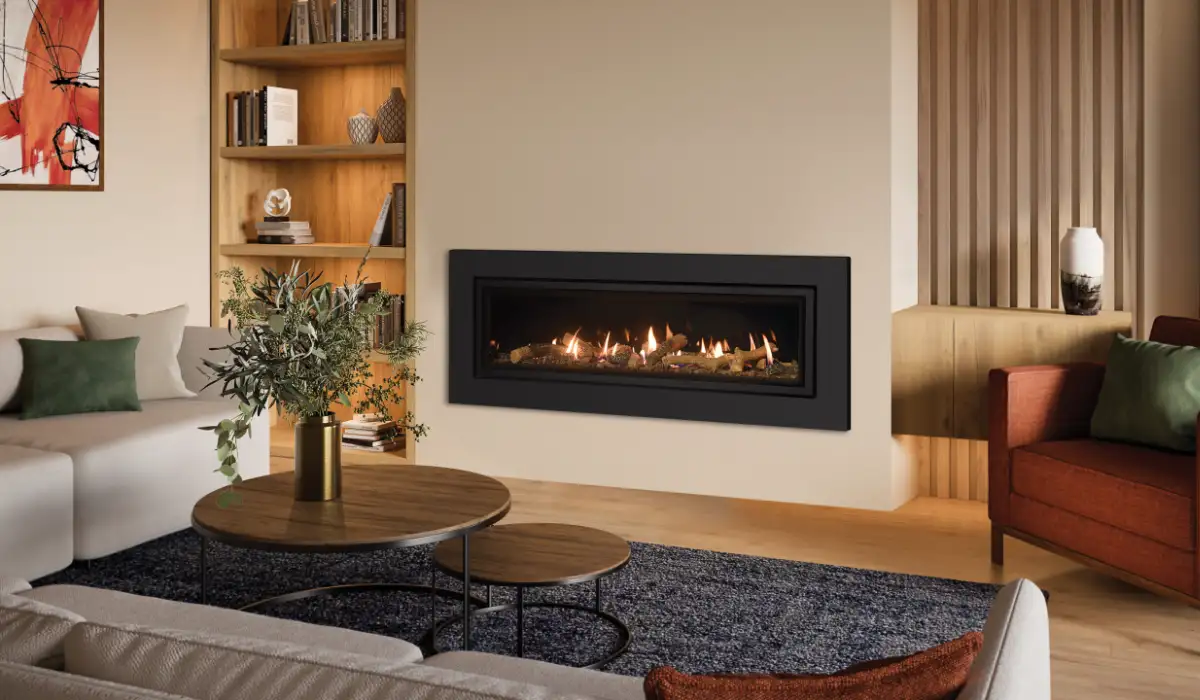
Choosing a new fireplace, stove or media wall feature often raises practical and technical questions. As full-service fireplace providers and installers, we are regularly asked about installation requirements, running costs, regulations and performance expectations. In this guide, Our Top 5 Fireplace FAQs, we address the most common homeowner concerns in detail, providing clear, professional guidance to help you make an informed decision.
A chimney is not always required to install a gas fireplace. Traditional gas fires may use an existing chimney breast and conventional flue system. However, modern balanced flue gas fires can vent horizontally through an external wall, making them suitable for properties without a chimney stack.
Flueless gas fires are also available, though they must meet strict room ventilation requirements and comply with Building Regulations. Installation must always be carried out by a Gas Safe-registered engineer to ensure safety and regulatory compliance.
Electric fireplaces do not require a chimney, flue or ventilation system because they produce no combustion gases. This makes them highly versatile for flats, new-build homes, and properties without chimney infrastructure.
Inset electric fires and media wall installations are particularly popular in modern homes where structural simplicity is preferred.
Even if your property does not have an existing chimney, a wood-burning stove can often be installed using a twin-wall insulated flue system. This external or internal flue system safely removes combustion gases while meeting UK regulations.
Professional assessment is essential to determine feasibility.
Gas fires are generally cost-effective compared to electric heating when used regularly. Modern glass-fronted gas fireplaces are highly efficient and can deliver significant heat output with lower per-kWh fuel costs than electricity, depending on current tariffs.
Annual servicing is required, but ongoing running costs remain competitive for sustained heating use.
Electric fires typically provide up to 2kW of heat output. While convenient and easy to install, their running costs depend entirely on electricity pricing. Flame-only settings consume minimal power, making them economical for ambience without heat.
Electric fireplaces are best suited for supplementary or zoned heating rather than whole-room primary heating in larger spaces.
Wood-burning stoves can offer economical heating if logs are sourced locally and stored correctly. Multi-fuel stoves provide additional flexibility by allowing smokeless fuels, though costs vary depending on supply and fuel type.
Fuel storage and proper seasoning are important considerations.
A well-installed fireplace or stove can significantly enhance a property’s appeal. Traditional fireplaces add architectural character, while media wall electric fires create a contemporary focal point aligned with modern design trends.
Buyers often associate fireplaces with warmth, comfort and lifestyle enhancement.
A high-efficiency gas fire or EcoDesign-compliant wood-burning stove can provide effective room heating, potentially reducing reliance on central heating systems during colder months.
Energy-conscious buyers may view this as a practical advantage, particularly with rising energy costs.
Value is maximised when installations are fully compliant with Building Regulations and certified by Gas Safe or HETAS-registered professionals. Proper documentation and certification provide reassurance to future buyers.
Wall-mounted electric fires can often be installed within a few hours, depending on cable routing and wall preparation. Inset electric fires or media walls require additional structural work and may take several days to complete.
The complexity of design significantly affects timescales.
Installing a gas fire may take 1 to 2 days, depending on the flue condition, hearth adjustments, and access to the gas supply. Balanced flue systems may require external wall penetration and structural modifications.
Pre-installation surveys help identify potential challenges in advance.
Wood-burning stove installations typically involve flue lining, chimney sweeping, hearth preparation, and appliance fitting. The process often spans 1 to 2 days, depending on the property’s condition.
Twin-wall flue installations in homes without chimneys may extend timelines slightly due to structural routing.
New-build homes without chimneys often favour electric fireplaces or balanced flue gas fires. Period properties with existing chimney breasts may be ideal candidates for wood-burning stoves or traditional gas fires.
Structural feasibility plays a key role in appliance selection.
If substantial heat output is required, gas fires and wood-burning stoves generally outperform electric models. For decorative ambience and convenience, electric fires provide flexibility and low maintenance.
Matching heat output to room size is critical for optimal efficiency.
Electric fireplaces require minimal servicing. Gas fires require annual safety checks. Wood-burning stoves require chimney sweeping and fuel management.
Your preferred level of involvement in maintenance may influence your choice.
These top fireplace FAQs highlight that there is no single solution suitable for every property. Installation requirements, running costs, fuel type, design preference and heating expectations all play a role in determining the most appropriate fireplace or stove.
Professional site surveys ensure that structural conditions, ventilation standards and regulatory compliance are assessed before installation. Whether selecting a modern electric fire, a high-efficiency gas fireplace, or a wood-burning stove, expert guidance ensures long-term performance, safety, and value.
Share this guide
Talk to our team
Our Kembrey Park showroom team can answer your question, check what will suit your home and quote.
Keep reading


What Fuels Are Legal to Burn in 2026? This is one of the most important questions stove owners must understand today. The…
From the showroom
We’ve supplied and fitted fires, stoves and media walls in Swindon for over 22 years. Tell us about your room and what you’re after, and we’ll call you back with honest advice.
Request a callback
Leave your details and we’ll call you back. Or call the showroom on 01793 640 485.
Cookies on our website
We use essential cookies to run this website. With your permission, we'd also like to use analytics cookies to see how it's used and improve it. Cookie policy